
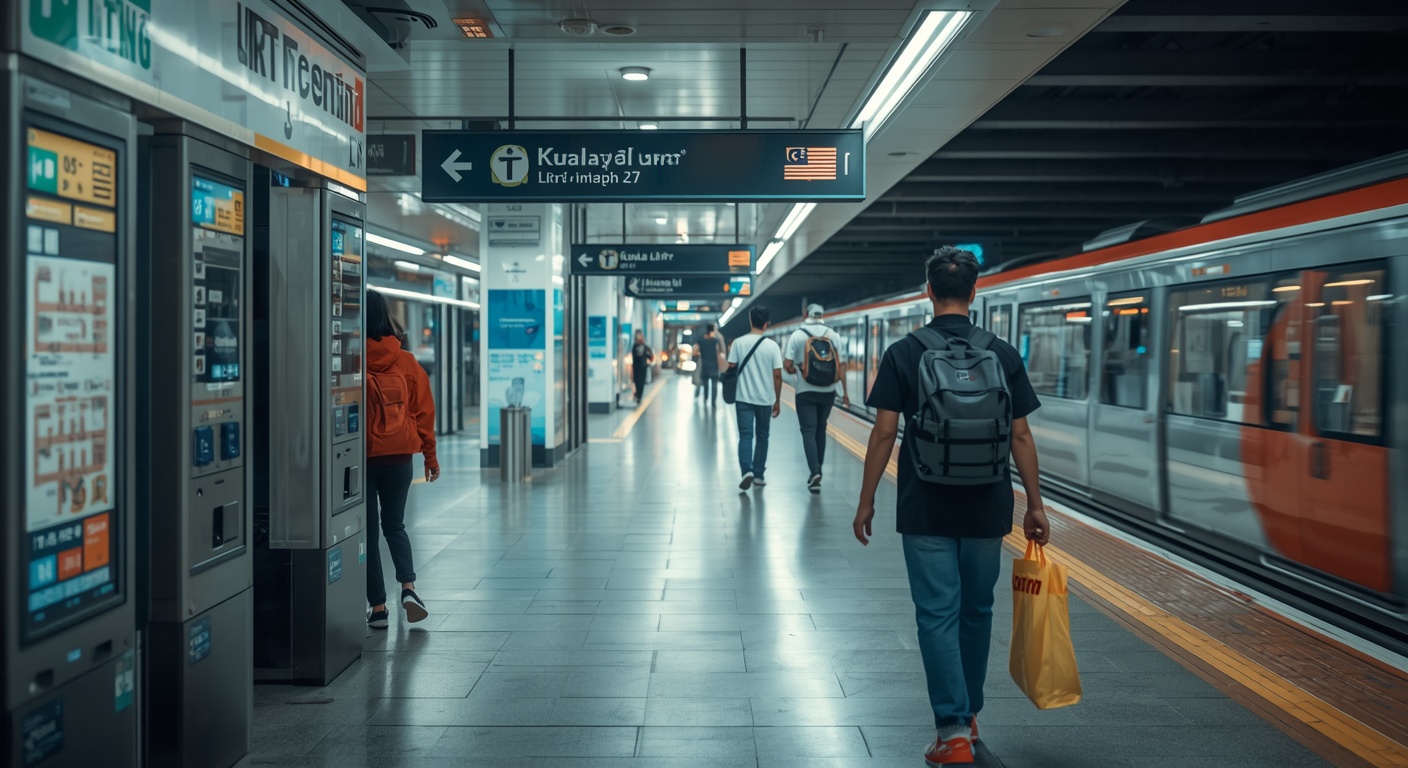
Kuala Lumpur has one of the most convenient urban rail systems in Southeast Asia, and the MRT plays a major role in helping locals and visitors move around the city quickly. If you are planning to explore shopping malls, business districts, tourist attractions, or residential areas, understanding how the MRT fits into Kuala Lumpur’s wider public transport network can save you time and money.
Although many people use the term “LRT” when talking about rail transport in the city, Kuala Lumpur’s system actually includes several train services such as the MRT, LRT, Monorail, KTM Komuter, and airport rail links. This guide focuses on how to use the MRT effectively while also showing how it connects with the rest of the public transport system in Kuala Lumpur.
What Is the MRT in Kuala Lumpur?
The MRT, or Mass Rapid Transit, is one of Kuala Lumpur’s most modern rail services. It was designed to reduce traffic congestion and improve connectivity between the city centre and surrounding suburbs. The system is clean, efficient, air-conditioned, and easy to use even for first-time passengers.
Currently, the MRT is one of the best options for commuters who want a fast and reliable journey across key parts of Greater Kuala Lumpur. Stations are clearly marked, trains arrive frequently, and signage is generally available in both Malay and English.
Main MRT Lines
- MRT Kajang Line – Connects Sungai Buloh to Kajang, passing through important stops such as Bukit Bintang, Pasar Seni, and Muzium Negara.
- MRT Putrajaya Line – Connects northern and central areas to Putrajaya, serving residential districts, commercial centres, and interchange stations.
These lines make the MRT especially useful for both daily commuting and sightseeing.
How the MRT Connects With Other Kuala Lumpur Transport Services
One of the biggest advantages of using the MRT is its integration with other forms of public transport. You can easily switch between train systems to reach different parts of Kuala Lumpur without needing a car.
Connections With LRT and Monorail
The MRT links with major LRT and Monorail stations, allowing passengers to access popular areas such as KLCC, Bukit Bintang, and Chinatown. For example, interchange stations like Pasar Seni and Bukit Bintang make transfers simple and convenient.
Connections With KTM Komuter
If you need to travel beyond central Kuala Lumpur, the MRT also connects with KTM Komuter services at selected stations. This is useful for those heading to suburban or regional destinations.
Connections With Buses
Many MRT stations are supported by feeder buses. These buses help passengers travel to nearby neighbourhoods, offices, schools, and housing areas that are not within walking distance of the train station.
- Feeder buses are often timed to support rail users.
- RapidKL buses provide wider city coverage.
- Park-and-ride facilities are available at selected stations for drivers who want to continue by train.
How to Use the MRT in Kuala Lumpur
Using the MRT is straightforward, even if you are new to the city. Stations are modern and user-friendly, with ticket counters, vending machines, route maps, and gate systems that are easy to understand.
Buying Tickets
You can travel on the MRT using several payment methods:
- Token tickets for single journeys
- Touch ’n Go card for frequent and cashless travel
- Integrated passes when available for multiple rail and bus trips
For regular users, a Touch ’n Go card is usually the most practical option because it speeds up entry and exit at stations.
Reading the Route Map
Every MRT station has route maps showing your current location, train direction, and interchange points. Before boarding, check:
- Your destination station
- The final station of the train line
- Any interchange station needed for your journey
If you are travelling during peak hours, allow extra time as trains and platforms can become crowded.
Best Reasons to Choose MRT for Getting Around KL
The MRT is often the preferred mode of transport in Kuala Lumpur because it avoids traffic jams and offers predictable travel times. This is especially valuable in a city where road congestion can become severe during rush hour and weekends.
- Fast travel across major city routes
- Affordable fares compared with private transport and e-hailing during busy periods
- Comfortable stations and trains with air-conditioning and security features
- Easy access to shopping, dining, and tourist destinations
- Reliable connections with LRT, buses, and other rail services
For tourists, the MRT is particularly useful for reaching central attractions without worrying about parking or navigating unfamiliar roads. For residents, it is a practical daily commuting solution.
Tips for Tourists and First-Time MRT Users
If this is your first time using the MRT in Kuala Lumpur, a little planning can make your trip smoother. While the system is generally simple, knowing a few basics helps you travel with confidence.
Helpful Travel Tips
- Travel outside peak hours if you prefer less crowded trains.
- Keep a stored-value card to avoid lining up for single-trip tokens.
- Use station maps to identify the correct exits, especially in large interchange stations.
- Stand on the correct side of escalators and allow passengers to exit before boarding.
- Check last train times if you are returning late at night.
It is also a good idea to use map apps or the official rail network information before starting your journey. This helps you estimate travel times and identify transfer stations more easily.
Popular Areas You Can Reach by MRT
- Bukit Bintang for shopping and nightlife
- Pasar Seni for culture, food, and access to Chinatown
- Muzium Negara for museum visits and connection to KL Sentral
- Kajang for food and suburban access
- Putrajaya-linked areas for government and administrative travel
FAQ About MRT in Kuala Lumpur
1. Is the MRT better than driving in Kuala Lumpur?
For many journeys, yes. The MRT helps you avoid traffic congestion, parking fees, and fuel costs. It is often faster during peak hours, especially when travelling to busy areas in central Kuala Lumpur.
2. Can tourists easily use the MRT in Kuala Lumpur?
Yes, the MRT is tourist-friendly. Stations have clear signage, maps, ticket machines, and English support. Many popular tourist areas are also connected by MRT or linked through interchange stations.
3. Does the MRT connect to KL Sentral?
The MRT does not stop directly at every line the same way, but it connects conveniently through interchange points such as Muzium Negara and Pasar Seni, making access to KL Sentral and other major transport hubs relatively easy.
The MRT has become an essential part of Kuala Lumpur’s public transport network, offering a fast, modern, and cost-effective way to move around the city. Whether you are a daily commuter, a student, or a visitor exploring KL for the first time, learning how to use the MRT can make your journeys simpler and more efficient.
With strong connections to LRT lines, buses, and major city destinations, the MRT is more than just a train service—it is one of the smartest ways to experience Kuala Lumpur with less stress and greater convenience.